
Understanding the Model Structure of a Watt-Hour Meter
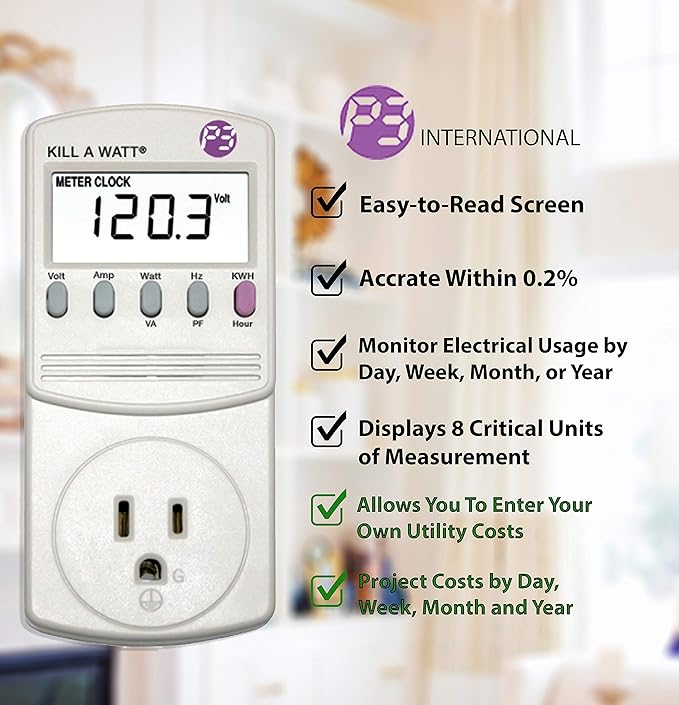
P3 International P4460 Kill A Watt EZ Electricity Usage Monitor , grey, Check The Price >>>
1. Overview of the Watt-Hour Meter Model
The watt-hour meter model is structured with a combination of letters and numbers in the format: category code + group code + design serial number + derivative number.
For instance, common household single-phase watt-hour meters include models like DD862-4, DDS97l, DDSY97l, etc.
Key Components of the Watt-Hour Meter Model:
- Category Code:
D– Electricity meter
- Group Code (Phase and Function):
- Phase Lines:
D– Single-phaseS– Three-phase, three-wireT– Three-phase, four-wire
- Usage Classification:
D– Multi-functionS– ElectronicX– ReactiveY– PrepaidF– Multi-rate
- Phase Lines:
- Design Serial Number: Represented by Arabic numerals; varies by manufacturer.
Examples:
- DD – Single-phase watt-hour meter (e.g., DD971, DD862)
- DS – Three-phase, three-wire active watt-hour meter (e.g., DS862, DS97l)
- DT – Three-phase, four-wire active watt-hour meter (e.g., DT862, DT971)
- DX – Reactive watt-hour meter (e.g., DX97l, DX864)
- DDS – Single-phase electronic watt-hour meter (e.g., DDS97l)
- DTS – Three-phase, four-wire electronic active watt-hour meter (e.g., DTS97l)
- DDSY – Single-phase electronic prepaid watt-hour meter (e.g., DDSY97l)
- DTSF – Three-phase, four-wire electronic multi-rate active watt-hour meter (e.g., DTSF97l)
- DSSD – Three-phase, three-wire multi-function watt-hour meter (e.g., DSSD97l)
2. Basic Current and Rated Maximum Current
- Basic Current: The current value that defines the primary characteristics of the watt-hour meter.
- Rated Maximum Current: The highest current value for which the meter maintains specified accuracy.
For example, a rating of 5(20)A indicates a basic current of 5A and a maximum current of 20A. For three-phase watt-hour meters, multiply the number of phases, such as 3×5(20)A.
3. Reference Voltage
The reference voltage determines the meter’s characteristics and is represented as follows:
- For a three-phase, three-wire meter:
3x380V - For a three-phase, four-wire meter:
3×220/380V - For a single-phase meter: The voltage at the terminal, e.g.,
220V.
4. Reading a Two-Phase or Three-Phase Four-Wire Watt-Hour Meter
- Reading Boxes:
- If no red reading box is present, the black boxes indicate integer values, with the scale on the right showing decimal values.
- If a red box is present, it displays decimal readings.
- With or Without Current Transformer:
- If no current transformer is used, the reading reflects actual consumption.
- If a transformer is used, adjust the reading by the transformer’s multiplier. For example:
- A 100/5 transformer has a multiplier of 20, a 200/5 has 40, and a 500/5 has 100.
- Actual power consumption = meter reading × multiplier.
- Transformer with Multiple Turns:
- If the transformer is wound for multiple turns, actual power consumption = (transformer ratio / number of turns) × meter reading.
Generally, decimal places are omitted in billing calculations.
5. Understanding Kilowatt-Hour (kWh) Costs
One kilowatt-hour (kWh) represents the energy used by a 1000-watt appliance running for one hour. For instance, if 1 kWh costs 1 yuan, then a 1000-watt appliance will cost 1 yuan to operate for an hour.
For example, a rice cooker rated at 1000W and 220V will cost 1 yuan for each hour of use.