Lightwave Oven vs. Induction Cooker: Which is Better?
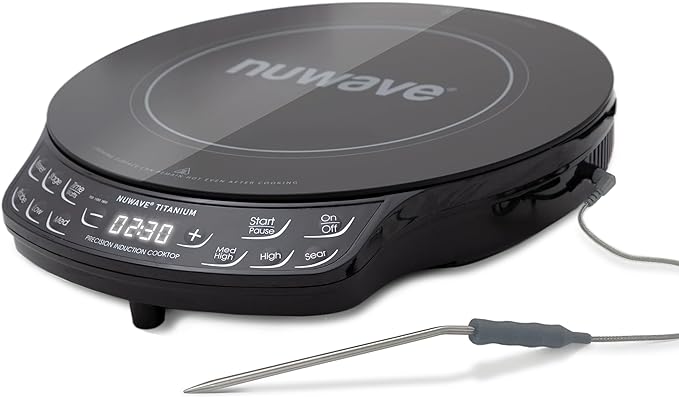
Nuwave 30221 PIC Titanium Pro, Countertop Appliance, Black, Check The Price >>>
Advantages of a Lightwave Oven:
- Reheating Fried Foods: Lightwave ovens effectively restore the texture of fried foods like oil cakes and fried dough sticks, which can become greasy and high in fat when they sit. They can remove excess grease and significantly reduce fat content.
- Reheating Nuts: Foods like peanuts and melon seeds, which can become astringent over time, regain their original crispy quality when reheated in a lightwave oven.
- Reheating Snacks: Items such as cakes, biscuits, and chocolates, which may mold over time, can be reheated in a lightwave oven to prevent mold.
- Reheating Meats: Lightwave ovens can reheat meat while reducing fat and cholesterol content, as they restore the meat’s original flavor and texture.
Advantages of an Induction Cooker:
- Fast Heating: Induction cookers can heat up to over 300 degrees Celsius in just 15 seconds, which is much faster than oil or gas stoves, saving time in the kitchen.
- Energy Efficiency and Environmental Benefits: Induction cookers have no open flame and heat the pot directly, achieving thermal efficiency between 80% and 92%. They produce no exhaust emissions or noise, making them more environmentally friendly and improving the kitchen environment.
- Versatility: Induction cookers can handle a variety of cooking methods, including frying, steaming, boiling, and stewing. They are commonly used in modern households, often replacing gas stoves.
- Easy to Clean: With no fuel residue or exhaust gases, induction cookers are easy to clean, unlike traditional stoves.
- High Safety: Induction cookers are safer than gas stoves as they do not leak gas or produce open flames. They include multiple safety features like auto-off functions, overheat protection, and no heat on the stove panel, making them safer for households with children or the elderly.
- User-Friendly: Induction cookers often feature simple one-key operations, making them easy to use for all ages. They are also portable, which is convenient for small living spaces.
- Affordable: While induction cookers use electricity, their fast heating reduces energy consumption, making them cost-effective compared to gas. Prices for basic models start at around 100 yuan, often including a pot.
- Reduced Investment: Commercial induction cookers require less kitchen space and eliminate the need for gas pipelines and ventilation systems, reducing installation costs.
- Precise Temperature Control: Induction cookers offer precise temperature control, which helps in cooking dishes to exact standards and enhances the quality of Chinese cuisine.
Differences Between Lightwave Ovens and Induction Cookers:
- Lightwave Oven: Combines lightwave and microwave technologies to heat food. It can operate with lightwaves, microwaves, or both simultaneously, offering advantages such as faster heating, even cooking, and nutrient preservation. Lightwave ovens often have a power output of 700-800 watts and are highly efficient, with energy utilization rates up to 95%. They are best for reheating and cooking food while preserving moisture and nutrients.
- Induction Cooker: Uses magnetic induction to generate heat directly in the cookware. It requires ferromagnetic pots (like iron or iron-containing stainless steel) to work effectively. Induction cookers are known for their speed, safety, energy efficiency, and ease of cleaning. They produce less magnetic radiation and are considered safer compared to traditional cooking methods.
Each appliance has its strengths, so the choice between a lightwave oven and an induction cooker depends on your specific cooking needs and preferences.