
I. How Much Does a Centrifugal Fan Weigh in Kilograms?
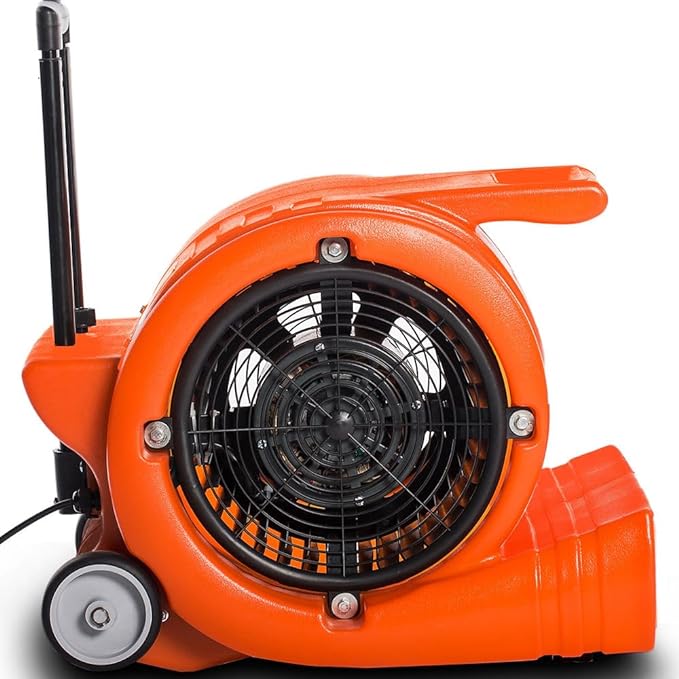
A centrifugal fan is a commonly used mechanical device. Before purchasing or using one, it’s important to consider its key attributes, such as its weight. So, how much does a typical centrifugal fan weigh?
The weight of a centrifugal fan varies depending on its power and specifications. Fans with different power levels and sizes will have different weights, generally ranging between 4 kg and 8 kg.
A centrifugal fan works by converting mechanical energy into air pressure, allowing it to move air efficiently. It is classified as a fluid-driven machine. The centrifugal fan was first invented by British engineer Gubel in 1862 and has since become widely used in various applications such as ventilation, dust removal, and cooling in factories, mines, tunnels, cooling towers, vehicles, ships, and buildings. It is also used for ventilation and induced draft in boilers and industrial furnaces, air conditioning in both commercial systems and household appliances, grain drying, wind tunnels, hovercraft propulsion, and much more.
II. What is the Efficiency of a Centrifugal Fan?
The motor efficiency of a centrifugal fan typically ranges from 50% to 90%. Generally, the larger the fan motor, the higher the efficiency. The fan’s air-blowing efficiency is estimated to be between 30% and 80%, meaning that 30% to 80% of the mechanical energy produced by the motor is converted into wind energy.
Methods to Improve the Efficiency of Centrifugal Fans
- Fan Design Optimization: One key factor in improving a fan’s efficiency is optimizing the design of the fan’s impeller and blade. The shape and angle of the blades are crucial. By adjusting the inlet and outlet angles of the blades, optimizing the profile of the impeller, and improving the air intake passages, the overall efficiency of the fan can be significantly enhanced.
- Matching Performance Parameters: To achieve optimal efficiency, the fan’s air volume and pressure should match the system’s needs. Advanced CFD (Computational Fluid Dynamics) simulations can help in selecting a fan whose efficiency is closely aligned with the system’s performance, ensuring that the fan operates efficiently within the pipe network system.
- Pipe Network Optimization: A poorly designed pipe network can increase resistance, reducing the fan’s efficiency and increasing energy consumption. A well-designed pipe system should minimize turbulence, especially at the fan’s inlet and outlet. To improve airflow and reduce resistance, it is recommended to design the pipes with fewer elbows and reasonable diameter transitions.
- Adjustment Methods: During operation, actual system resistance may differ from theoretical predictions, requiring adjustments to the fan’s operating point. Common adjustment methods include inlet baffle control and variable speed adjustment. Inlet baffle adjustments, while effective, can cause higher resistance and lower fan efficiency. A more efficient method is to use a frequency conversion motor or a permanent magnet motor to adjust the fan speed, which allows for better matching with the system’s actual resistance, ultimately reducing energy consumption.