
The Difference Between Raw Soil and Cooked Soil
1. Conceptual Differences
Raw Soil: Also known as “dead soil,” raw soil refers to the original, undisturbed soil that has not been turned over by human activity. In natural environments, the loose surface layer with numerous plant roots is considered mellow soil, while the deeper layer, where plant roots find it difficult to penetrate, is known as raw soil.
Cooked Soil: Cooked soil, or mellow soil, is soil that has been turned over or cultivated. When preparing land for planting crops, the soil is often tilled to improve its quality and support better plant growth. Cultivated land typically has a high degree of soil maturity, featuring loose texture, good structure, excellent aeration and water permeability, and high fertility.
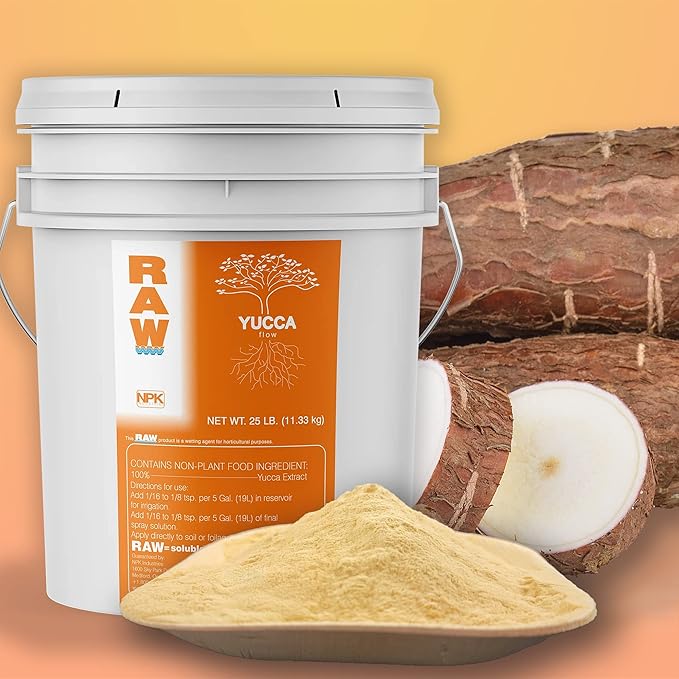
RAW Yucca 25lb – Natural Wetting Agent for Deeper Nutrient Penetration, Check The Price >>>
2. Visual Differences
Raw Soil: Raw soil is uniform in color, fine in structure, compact in texture, and relatively pure.
Cooked Soil: Cooked soil often exhibits uneven color and structure, with a generally loose texture that contains various mixed materials.
How to Convert Raw Soil to Cooked Soil
1. Covering Raw Soil with Mellow Soil
When renovating farmland, instead of simply leveling the land, the existing mellow soil is first collected and set aside. After leveling, the mellow soil is spread back over the ground to improve soil quality. This method is particularly useful for smaller areas of raw soil, as mellow soil, enriched with organic matter and beneficial microorganisms, promotes healthy crop growth.
2. Leveling, Deep Plowing, and Drying
For raw soil where mellow soil has been removed, the land should be leveled and then deep plowed. It is crucial to perform deep plowing when soil moisture is optimal, as this process exposes the soil to wind, sun, and rain, enhancing its water retention, fertilizer retention, and nutrient availability. This treatment also encourages the growth of soil microorganisms and accelerates soil maturation.
3. Planting Green Manure and Returning Straw to the Field
While plowing, planting legume crops can further improve soil quality. These plants serve as green manure, which is plowed back into the soil to enhance its fertility. After allowing these crops to grow to a height of 20-30 cm, they are incorporated into the soil. Additionally, scattering crop residues like straw, leaves, and weeds on the ground before deep plowing helps to increase soil organic matter. It’s important to spread these materials evenly to prevent clumping, which can slow down decomposition.
4. Increasing Organic Fertilizer Application
After deep plowing and the application of green manure and crop residues, the soil can be further enhanced with organic fertilizers. Decomposed livestock and poultry manure, human manure, bean dregs, and oil cakes are all excellent sources of organic matter. If the soil is acidic, adding plant ash or quicklime can help neutralize the acidity. In clayey soils, incorporating slag can improve soil permeability, further promoting soil maturation.