
What is an Electronic Thermometer?
An electronic thermometer is a device designed to measure the human body’s temperature through electronic components, such as temperature sensors. It utilizes the physical parameters of certain substances, including resistance, voltage, current, etc., to establish a definitive relationship between ambient temperature and body temperature, displaying the results in numeric form.
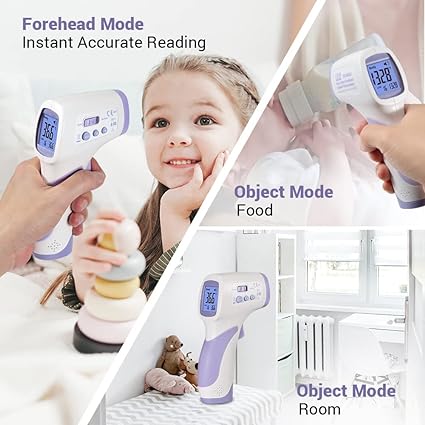
Broadly speaking, there are two types of electronic thermometers: contact and non-contact. Contact thermometers, resembling traditional mercury thermometers, require physical contact with body parts like the armpits or mouth for temperature measurement.
Is the Electronic Thermometer Accurate?
Commonly used electronic thermometers, such as ear and forehead thermometers, may exhibit inaccuracies. Clinical thermometers used for body temperature measurements traditionally focus on three areas: the mouth, armpit, and anus. Forehead and ear temperatures, being surface readings, are heavily influenced by external temperatures and may not accurately reflect true body temperature, deviating from precise diagnostic standards. These thermometers, employing infrared induction without direct contact with the body, are prone to certain errors.
The error margin between ordinary electronic thermometers and mercury thermometers is similar, both falling within ±0.1 ℃. However, accuracy depends on correct usage. For instance, removing the thermometer upon hearing a prompt sound after just one minute may lead to inaccuracies, as the sound only signals preheating completion, and the actual measurement takes a few minutes. Factors like incorrect placement and the dryness of the armpit during axillary temperature measurement can also impact electronic thermometer accuracy.
How to Use the Electronic Thermometer Correctly
-
Disinfect the thermometer’s head with alcohol before use.
-
Press the switch; the buzzer will beep for approximately 2 seconds.
-
The display briefly shows the last measured temperature for about 2 seconds. Subsequently, the “℃” symbol on the display flashes, indicating the thermometer is ready for use. If the room temperature exceeds 32°C, the “°C” symbol will continuously flash.
-
Place the thermometer in the armpit or mouth for temperature measurement. The displayed temperature gradually increases, and the flashing of the “℃” symbol continues.
-
When the temperature rise rate is less than 0.1℃ within 16 seconds, the “℃” symbol stops flashing, and the thermometer beeps for approximately 5 seconds, indicating the completion of measurement. The displayed temperature value can then be read.
-
The thermometer has an automatic shutdown feature, turning off within 10 minutes post-measurement. For battery conservation, it is recommended to manually turn off the power using the power button after the measurement.