I. Is the Forehead Thermometer Accurate?
The forehead thermometer, functioning as a non-contact infrared thermometer, provides convenient and rapid body temperature data but lacks the precision of a traditional mercury thermometer.
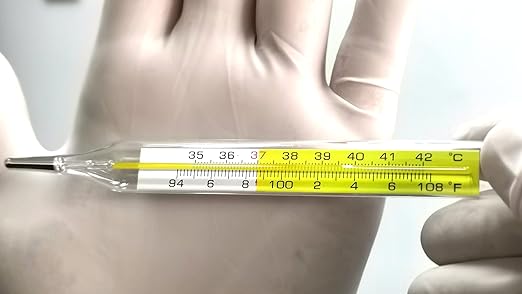
Firstly, in clinical practice, body temperature is often measured using methods such as the armpit, mouth, or rectum, excluding forehead temperature. The exposed nature of the forehead’s skin makes it susceptible to external temperature influences, leading to potential inaccuracies, especially when transitioning from outdoors to indoors, causing substantial temperature differences. Secondly, improper usage of the forehead thermometer, such as positioning the instrument too far or too close to the forehead, can result in significant temperature measurement errors.
In general, the forehead thermometer’s accuracy is inferior to that of the mercury and ear thermometers. However, it can serve as an initial screening tool to identify fever and confirm abnormal body temperatures. If abnormalities are detected, it is advisable to use a more accurate mercury thermometer or ear thermometer for precise measurement.
II. How to Use the Forehead Thermometer Accurately
-
Eliminate Interference Factors: Consider environmental elements like air and water vapor, sweat or dirt on the forehead, dust and water vapor in the optical system, and temperature variations between indoors and outdoors. Use the forehead thermometer in a windless environment above 16°C.
-
Proper Measurement Technique: When measuring body temperature with the forehead thermometer, aim the instrument at the center of the subject’s forehead, keeping it vertical. Avoid any obstructions like clothing or hair, and press the measurement button from a distance of 3cm-5cm.
-
Subject Precautions: Subjects should avoid strenuous exercise, eating, drinking cold or hot water, and applying hot or cold compresses 20-30 minutes before temperature measurement.
-
Multiple Measurements: Due to potential errors, it is recommended to measure body temperature three times at fixed intervals and calculate the average value.
-
Temperature Difference Considerations: In cases of significant temperature differences between indoor and outdoor environments, the forehead thermometer may yield abnormal results, rendering the measured body temperature unreliable. Measure areas not covered by clothing or allow the body and external environment to reach thermal equilibrium before measurement.
III. Precautions for the Use of Infrared Forehead Thermometer
-
Temperature Adjustment: If the testee arrives from a location with a substantial temperature difference, they should acclimate in the measurement environment for at least 5 minutes before taking measurements.
-
Sweating Considerations: If a fever patient has forehead sweat due to cold compresses or cooling measures, the measurement result may be lower. Avoid measurement under such conditions.
-
Environmental Stability: Ensure stability in the subject’s surroundings; avoid measuring in areas with significant airflow from fans or air conditioners.
-
Sunlight Avoidance: Do not use the product in direct sunlight.
-
Product Storage: If not in use for an extended period, remove the battery to prevent leakage and potential damage to the product.
-
Infant and Child Considerations: For infants and young children, whose thermoregulatory center is less developed, measure different body parts such as the carotid artery, chest, or belly for a more comprehensive assessment due to potential external influences affecting forehead measurements.