Differences Between Solid State Relays and Ordinary Relays
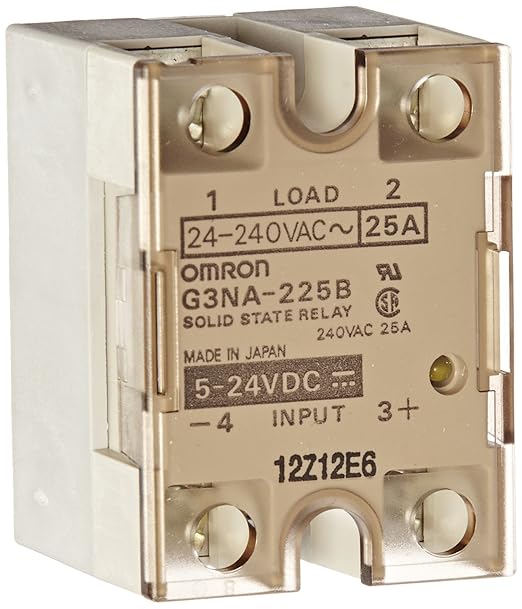
Relays are essential electrical control devices that create a predetermined change in the output circuit based on changes in the input signal. They serve as “automatic switches” that enable a small current to control a larger current, facilitating automatic adjustments, safety protections, and circuit conversions. This article explores the major differences between solid state relays and traditional electromagnetic relays.
Ordinary Relays
An ordinary relay operates by using an electromagnet to control the opening and closing of electrical contacts. When the input signal (excitation quantity) meets certain criteria, the relay switches the output circuit accordingly. It consists of two main parts: the control system (input loop) and the controlled system (output loop). These relays are commonly used in automated control circuits and perform functions such as switching and protection.
Solid State Relays (SSRs)
Solid State Relays (SSR) are non-contact switching devices that use semiconductor components—such as transistors or triacs—to switch circuits without mechanical movement. SSRs have no physical contacts, which eliminates issues like arcing and wear associated with mechanical relays. They feature four terminals: two for input control and two for output control. SSRs offer high reliability, fast response times, and minimal external interference, making them suitable for high-power switching applications.
Key Differences
- Structural Differences
- Electromagnetic Relays: Use an electromagnet to create a mechanical movement that opens or closes contacts.
- Solid State Relays: Utilize semiconductor components to switch circuits electronically without moving parts.
- Operating Methods
- Electromagnetic Relays: Rely on electromagnetic induction to control circuit switching. They can handle both AC and DC inputs.
- Solid State Relays: Use electrical, magnetic, and optical properties of semiconductors to perform switching. They are available in various configurations, including DC input-AC output, AC input-AC output, and more.
- Response and Longevity
- Electromagnetic Relays: Typically have slower response times, generate noise, and have a limited lifespan due to mechanical wear.
- Solid State Relays: Offer fast, silent operation and a longer lifespan because they lack mechanical components.
- Environmental Suitability
- Electromagnetic Relays: Performance can be affected by factors like temperature, humidity, altitude, dust, chemical gases, and electromagnetic interference.
- Solid State Relays: Generally perform better in harsh environmental conditions and are less susceptible to external influences.
- Electrical Performance
- Electromagnetic Relays: Generally simpler to drive, consume more power, and tolerate short-term overloads well. They may not handle high current or power as effectively as SSRs.
- Solid State Relays: Offer superior performance in controlling high current and high power, though they may have a higher initial cost and less tolerance for overloads.
In summary, solid state relays provide a more durable and efficient solution for many modern applications, particularly where high reliability and fast response times are crucial. Traditional electromagnetic relays, however, remain simpler and cost-effective for specific uses. Understanding these differences can help in selecting the appropriate relay for your needs.