What is an AV receiver?
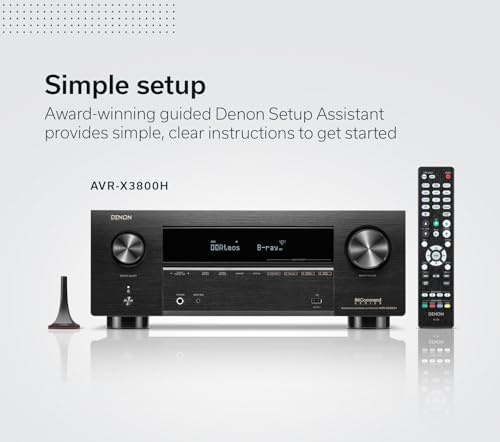
An AV (audio-visual) receiver is an amplifier that integrates both audio and video signal processing. The “A” in AV stands for audio, meaning sound, and the “V” stands for video, meaning image. An AV receiver is dedicated to enhancing the sound field ambiance, making it ideal for home theater systems.
What is a Hi-Fi amplifier?
A Hi-Fi (high-fidelity) amplifier is designed to amplify and process sound to restore its original quality, emphasizing its authentic characteristics. It is specifically used for enjoying music, such as classical music, with high fidelity.
The Difference Between AV Power Amplifiers and Hi-Fi Power Amplifiers
- Technical Indicators
Hi-Fi power amplifiers emphasize technical indicators such as output power, harmonic distortion, signal-to-noise ratio, frequency range, rated impedance, and damping coefficient, with a particular focus on harmonic distortion and signal-to-noise ratio. AV power amplifiers, while also considering these indicators, place more emphasis on sound channel isolation, delay time range, various sound field modes (DSP system, home THX system, Dolby AC-3 system), and additional video-related indicators.
- Sound Field Atmosphere
Hi-Fi amplifiers are designed to reproduce sound with high fidelity, focusing on enjoying music and vocals with a realistic sound effect. In contrast, AV amplifiers aim to create a sound field that emphasizes the sense of direction and simulates the atmosphere of various listening environments, such as movie theaters, halls, churches, stadiums, and studios.
- Number of Playback Channels
Hi-Fi amplifiers typically use two channels for playback, amplifying the signals of the left and right channels to create a stereo sound field. AV power amplifiers, on the other hand, have 4-9 channels, promoting multi-channel speakers to form a surround sound field. For example, Dolby AC-3 requires 5.1 channels (left, center, right, left surround, right surround, and subwoofer).
- Circuit Design
The circuit design of Hi-Fi power amplifiers is relatively simple, involving few signal processing procedures, primarily combining amplification circuits with switching and adjustment circuits. AV power amplifiers, however, have more complex circuit designs with additional decoding circuits, delays, and reverberation circuits. They are responsible for amplifying multiple signals and include video circuits, resulting in a high degree of integration and numerous signal processing programs.
Can an AV Amplifier Replace a Hi-Fi Amplifier?
No, an AV amplifier cannot replace a Hi-Fi amplifier. The reasons are as follows:
- Insufficient Confidence with Large Signal Sound Sources
AV amplifiers often struggle with large signal sound sources. This can be observed from the product manual, where the output power of the AV amplifier in a two-channel state is larger than in a four-channel state. Even if some manufacturers claim otherwise, a listening test with music that has a large dynamic range will reveal the AV amplifier’s limitations. The total power consumption of an AV amplifier is significant, leading to insufficient power reserves, whereas Hi-Fi power amplifiers handle such situations more calmly.
- Wiring Affects Sound Quality
AV amplifiers come equipped with various video and audio ports connected to multiple sets of signal sources, resulting in many signal lines that can cause mutual interference. Distributed capacitance particularly affects high-frequency audio and its harmonics, attenuating or interfering with high-quality signal sources’ rich high-frequency components, thus compromising the high-fidelity effect.
- Interference from Fluorescent Screens
AV amplifiers feature large fluorescent displays on the panel for intuitive and vivid operation. However, these displays use low-voltage AC, with the filament heated and characters displayed via pulse signals, emitting significant electromagnetic interference that can noticeably affect sound quality.