Types of Life Rafts
- Rigid Life Rafts
Rigid life rafts, also known as traditional life rafts, feature a construction primarily composed of galvanized iron sheets, aluminum alloy plates, stainless steel plates, or rigid plastic materials forming several interconnected air chambers serving as the primary buoyancy components. The raft may or may not be covered with flame-retardant material. Equipped with a fixed rigid canopy and entrance/exit, these rafts typically feature a wooden lattice bottom and are usually stored fixedly on the ship’s side ramp or bridge deck. Deployment involves releasing the securing hooks, allowing the raft to slide down into the water via a sliding frame or launched with a raft frame.
While offering a straightforward design and cost-effectiveness, rigid life rafts are characterized by their bulkiness, limited capacity, and cumbersome nature.
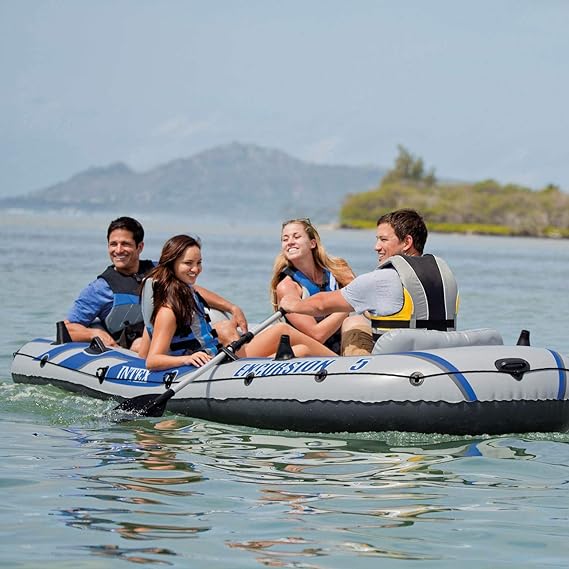
- Inflatable Life Rafts
Inflatable life rafts encompass various subtypes, including inflatable life rafts, inflatable life buoys, and inflatable self-righting life rafts.
(1) Inflatable Life Raft
Constructed with upper and lower rubber floating tubes for buoyancy and double-layer waterproofing, inflatable life rafts are inflated into tent-like structures made of nylon cloth, adopting circular, oval, or polygonal shapes. Foldable when not in use, these rafts are stored alongside accessories in fiberglass-reinforced plastic containers. With advanced design, compactness, and ease of deployment, they find extensive use in both civilian and military vessels. Deployment methods include mechanical hoisting and throwing, with the latter requiring manual launching and righting if overturned during inflation.
(2) Inflatable Life-Saving Buoys
Similar in construction to inflatable life rafts but lacking a tent, inflatable life-saving buoys offer the same performance and safety standards. They are deployed solely through throwing and feature boarding platforms on both sides or any side for swift boarding. With a higher occupant capacity, typically up to 50 individuals, and no need for manual righting due to their double-layer bottom, these buoys are favored for passenger ships, despite their vulnerability to sea conditions.
(3) Inflatable Self-Righting Life Raft
Designed to address potential overturning during deployment, inflatable self-righting life rafts feature a rounded top that reduces water contact surface, enabling automatic self-righting upon inflation. This design ensures enhanced safety for marine survival personnel.
Performance Requirements of Inflatable Life Rafts:
- Withstand exposure and remain afloat for 30 days under all sea conditions.
- Safely usable after dropping from a height of 18m into water.
- Withstand repeated pedaling from a height of at least 4.5m above the raft without damage.
- Able to be towed at a speed of 3 knots with occupants and attachments.
- Equipped with a canopy for occupant protection upon water descent.
- Minimum occupancy of 6 individuals.
- Total mass not exceeding 185kg.
Storage, Inspection, and Maintenance:
- Store life rafts and associated equipment without hindering access to other life-saving equipment.
- Maintain a safe distance from the waterline during storage and ensure swift boarding preparations.
- Regular inspection and maintenance intervals not exceeding 12 months, with replacements as necessary.
- Lifespan of the raft body typically 10 to 15 years.
- Ensure clear markings and proper storage conditions to avoid damage and ensure readiness for deployment.
Deployment Methods:
- Throwing: Manually or gravity-assisted launch into the sea, followed by rapid inflation.
- Mechanical Lifting: Utilized mainly for passenger or specialized vessels, involving hoisting and inflation from designated platforms for streamlined boarding procedures.